



RC LiPo battery: choose C rating, capacity, and safe charging (2026 guide)
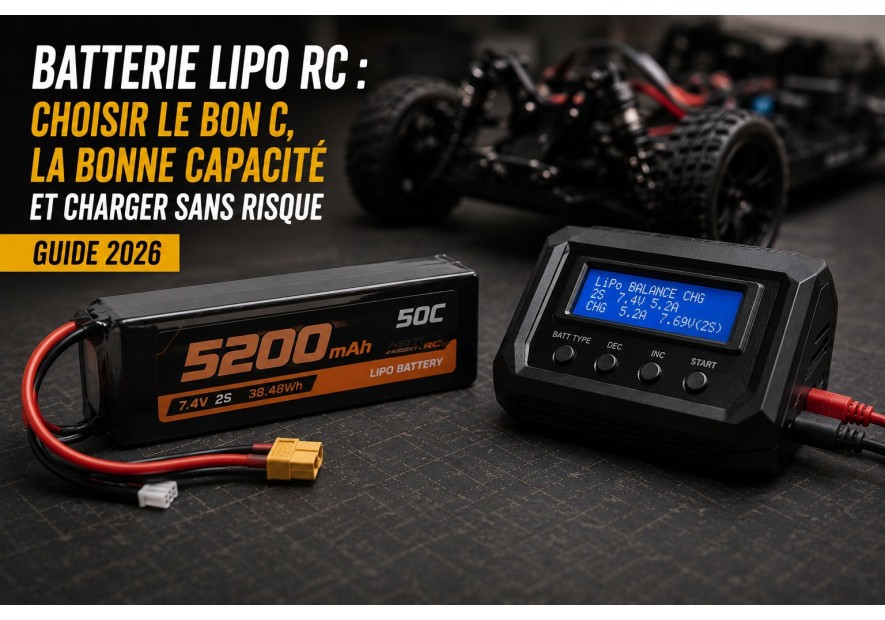
Practical guide to choose an RC LiPo battery based on setup compatibility, driving style, and reliability goals.
Choosing an RC LiPo battery can be confusing: cell count, capacity (mAh), C rating, and charging rules all matter. This guide gives you a practical framework to pick the right pack for your RC car while reducing wear and safety risks.
Key point: the best LiPo is not the biggest one, but the one that matches your ESC, motor, chassis format, and real driving style.
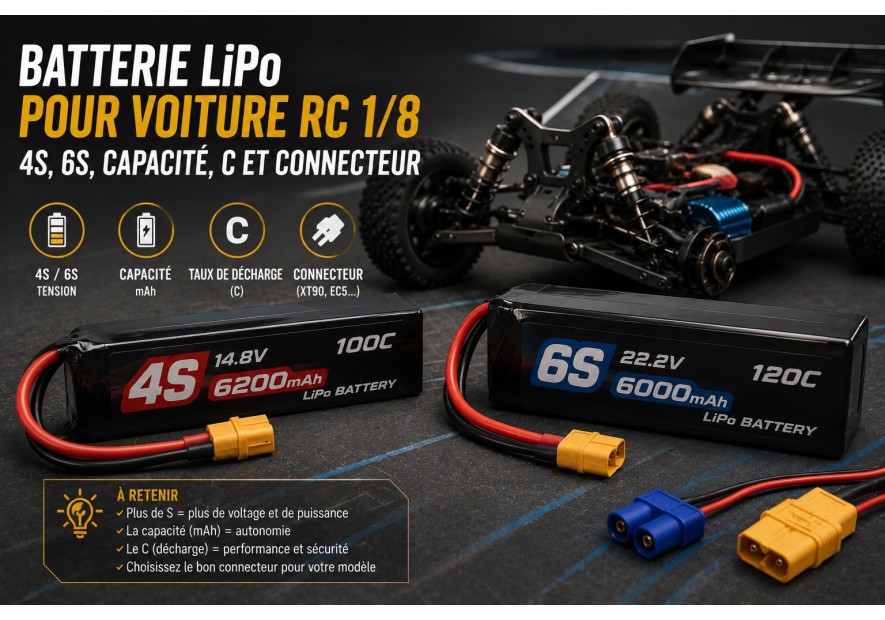
1. RC LiPo basics you must check first
- mAh: energy reserve and potential runtime;
- S rating (2S, 3S...): pack voltage level;
- C rating: discharge capability under load;
- physical format: dimensions and connector compatibility.
2. 2S vs 3S: practical differences
Moving from 2S to 3S increases voltage, speed potential, and punch, but also raises heat and drivetrain stress.
- 2S: easier to manage, usually ideal for consistent setup and durability.
- 3S: stronger performance, but requires tighter setup control and monitoring.
3. Capacity (mAh): runtime versus weight
Higher capacity may increase runtime, but usually adds weight. Extra weight can reduce agility and change chassis balance.
4. C rating explained simply
C rating indicates theoretical maximum discharge current. A pack with insufficient discharge capability may run hot and sag under load.
Quick reference: max theoretical current = capacity (Ah) x C rating.
5. Choosing by RC use case
Bashing
Prioritize durability, stable output, and realistic safety margin.
Track use
Prioritize weight control and voltage consistency over the full run.
Crawler use
Prioritize smooth low-speed control and useful runtime.
6. Charging and storage essentials
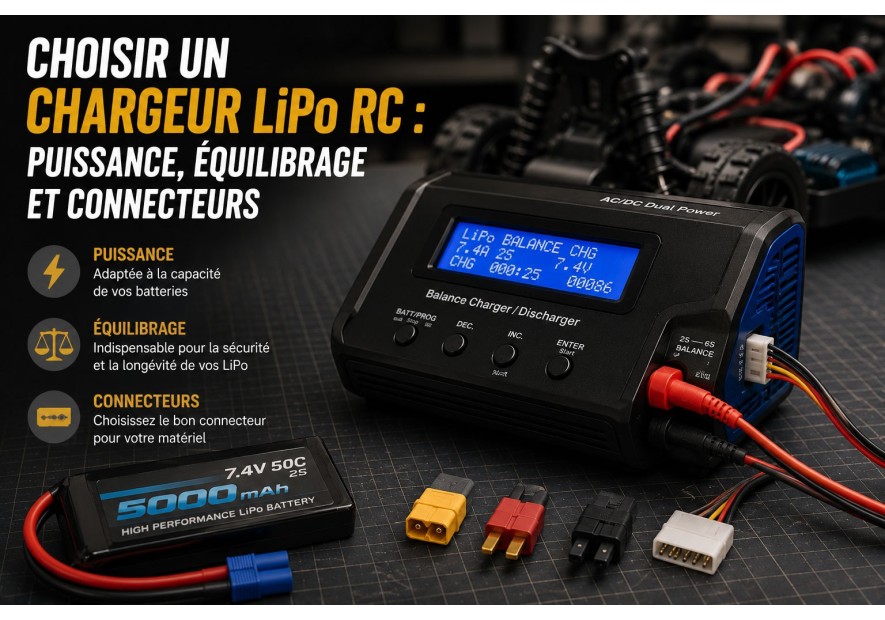
- Use a proper LiPo charger with balancing mode.
- Follow manufacturer charging recommendations.
- Never leave charging packs unattended.
- Store packs at storage voltage when not used.
- Stop using swollen or damaged packs immediately.
7. Common mistakes to avoid
- Choosing by capacity only.
- Switching to 3S without checking full electronic compatibility.
- Ignoring pack dimensions and connector constraints.
- Running with an incorrect low-voltage cutoff.
- Skipping balance charge and storage routine.
8. Fast selection checklist
- Validate ESC/motor voltage compatibility.
- Measure battery tray dimensions.
- Define your priority: runtime, performance, or balance.
- Pick capacity with weight impact in mind.
- Choose a realistic C rating with safety margin.
- Confirm charging, connector, and storage workflow.
9. Related guides to improve your RC setup
To go further and improve reliability across your full RC setup, these guides are especially useful:
- RC pinion/spur gear ratio setup
- Brushed vs Brushless: choosing the right RC motor
- RC car suspension setup guide
- RC tires by surface: practical guide
You can also browse these categories:
RC LiPo FAQ
What LiPo should I choose as a beginner?
Start with a fully compatible pack that balances runtime, weight, and safe charging workflow.
2S or 3S for an RC car?
2S is often easier and more forgiving. 3S offers more performance with higher stress and setup demands.
What does 50C mean?
It is a discharge capability indicator used for power-demand matching.
Can I charge above 1C?
Only if the manufacturer explicitly allows it.
Why is my LiPo getting hot?
Possible causes include excessive current draw, gearing mismatch, battery aging, or high ambient temperature.
