


Which RC car should you choose? Complete beginner guide
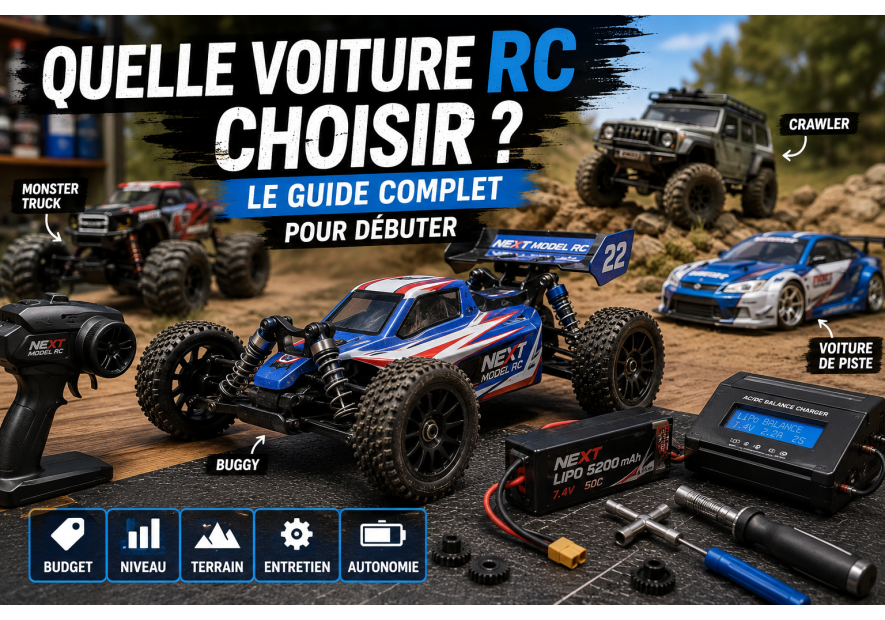
Choosing your first RC car is easier when you compare the right criteria: terrain, budget, scale, maintenance, and upgrade path. This guide gives you a practical method to avoid expensive mistakes.
1. Start with your real usage
- Asphalt and parking lots: stable setups and road-oriented tires.
- Dirt and mixed terrain: more ground clearance and versatile chassis.
- Bashing sessions: focus on durability and easy spare-part access.
2. Main RC car families for beginners
Buggy
Good all-round compromise for many surfaces.
Monster truck
Great for rough terrain and fun driving style.
On-road models
Best for flat surfaces and precision-oriented driving.
3. Electric setup decisions: brushed or brushless
Brushed setups are often simple to start with. Brushless setups offer stronger performance and may require stricter tuning discipline.
Read also: Brushed vs Brushless RC motor guide.
4. Battery and charger choices
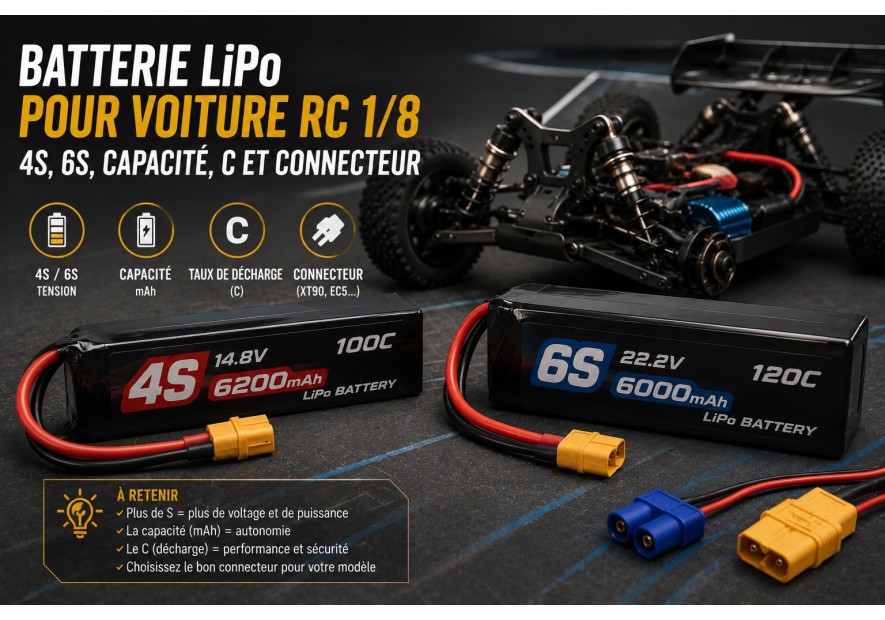
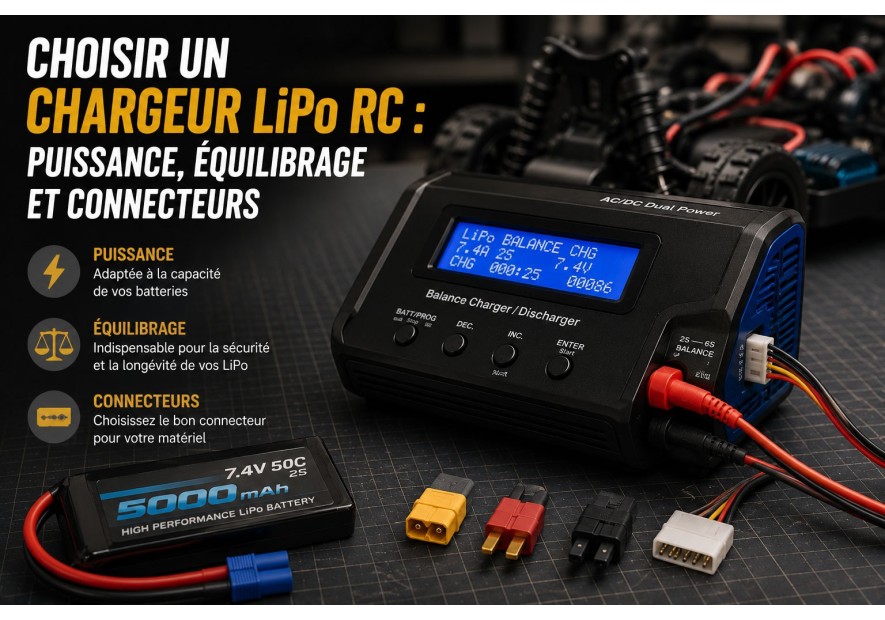
Your battery and charger choices affect runtime, reliability, and long-term cost. Always match LiPo specs to your ESC/motor limits and your chassis battery tray format.
5. Setup and maintenance: what beginners often miss
Basic maintenance and setup quality matter as much as raw specs.
6. Quick decision framework
- Pick your main terrain.
- Set a realistic total budget (car + batteries + charger + spare parts).
- Choose a platform with available parts and clear upgrade options.
- Validate your power system and battery ecosystem before purchase.
Beginner RC car FAQ
What is the best RC car type for a beginner?
A versatile and durable platform with easy parts availability is usually the safest first choice.
Should I start with brushed or brushless?
Brushed can be simpler at first, while brushless gives stronger performance and requires tighter setup control.
Do I need multiple batteries from day one?
Not mandatory, but having more than one compatible pack can make sessions smoother and reduce downtime.
