


Best glues for scale models: styrene, resin, metal | Practical guide
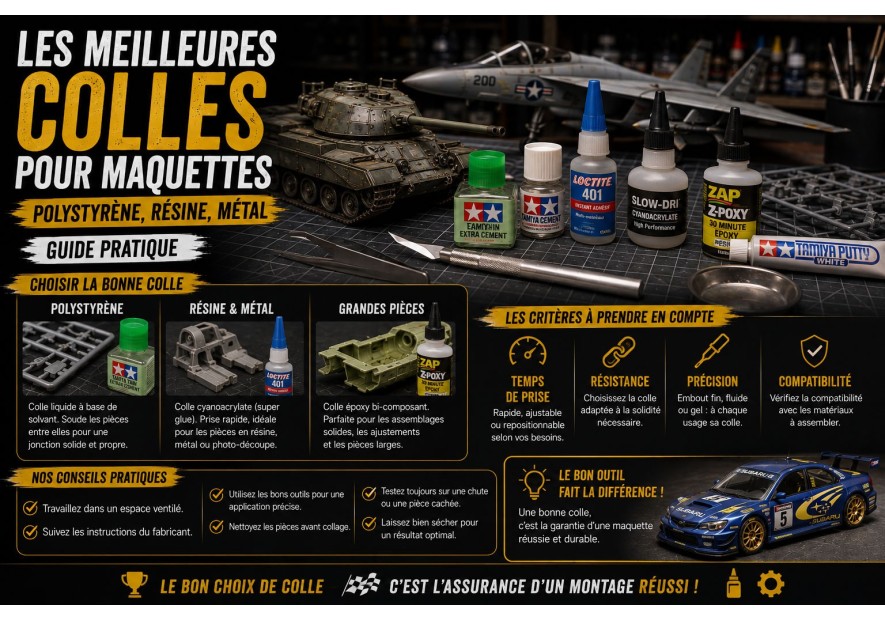
There is no single best glue for every model task. Clean assembly comes from matching adhesive type to material and joint stress.
1. Match adhesive type to material
- Styrene: liquid cement for capillary welded seams.
- Resin and metal: CA glue (thin or gel) for controlled bonding.
- High-load joints: two-part epoxy for strength and adjustment time.
- Clear parts: non-aggressive canopy-safe adhesive.
2. When to use liquid cement
Liquid cement is ideal for styrene kits because it softens and welds plastic edges. It provides clean seams and good alignment when parts fit correctly.
3. CA glue: precision and speed
CA works well on resin, photo-etch, and metal details. Use minimal quantity and control placement to avoid frosting and overflow.
4. Epoxy for structural security
Two-part epoxy is useful when you need higher strength and working time, especially on larger assemblies or mixed-material joints.
5. Practical glue workflow
- Dry-fit first.
- Degrease contact zones.
- Apply small, controlled amounts.
- Hold parts until stable.
- Wait for full cure before sanding or painting.
6. Frequent mistakes
- Using too much CA on visible areas.
- Using styrene cement on resin/metal parts.
- Rushing sanding before full cure.
- Ignoring test-fit and forcing stressed joints.
7. Related guides and categories
Scale-model glue FAQ
Can I use one glue for plastic, resin, and metal?
You can, but results are usually less reliable. Material-specific glue selection is better.
Why does CA leave white marks?
CA fumes can frost nearby surfaces, especially clear parts. Use minimal amounts and ventilation.
Is epoxy always stronger than CA?
Epoxy is often better on structural joints, while CA is faster for small precise parts.
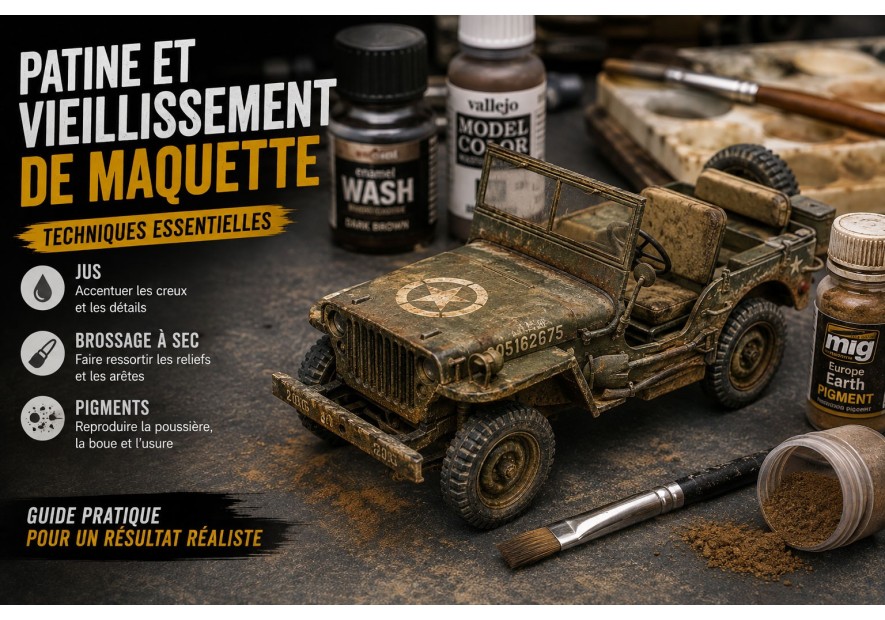
Once your assembly is completed and cured, learn how to add depth and realism with our guide on scale model weathering (washes, drybrushing, and pigments). For metal detailing and resin upgrades, also explore the comprehensive tutorial on cutting, bending, and gluing photo-etched & resin parts on NextModelKit.
